

Accounting for Income Taxes – A Timely Refresher and Update
This 90-minute accounting for income taxes webinar is a refresher on the balance sheet approach and the basic provisions of SFAS 109 (ASC 740-10). It explains why the profession moved away from the income statement approach and how that changed income tax accounting.
You'll follow deferred tax assets and liabilities from creation to write-off, see specific examples of temporary and permanent differences, and learn when a valuation account is needed because it is more likely than not that a net deferred tax asset won't be fully realized.
The session also covers the current and deferred provision, net operating loss carrybacks and carryforwards, tax rate considerations including future rate changes, multiple tax rates and temporary differences, AMT and intraperiod tax allocation.
- Explain the historical problems with income tax accounting and how the balance sheet approach changed it
- Apply the fundamentals of accounting for income taxes
- Create deferred tax balance sheet accounts
- Treat temporary and permanent differences correctly
- Assess how future activities affect deferred tax assets and liabilities
- Determine when a valuation account is needed
- Describe the basic provisions of SFAS 109 (ASC 740-10)
- Historical problems with accounting for income taxes
- The balance sheet approach and why it replaced the income statement approach
- Accounting for the current provision
- Accounting for the deferred provision
- Temporary differences and how they reverse
- Permanent differences and why they are ignored for deferred tax purposes
- Creating and writing off deferred tax assets and liabilities
- When a valuation account is needed
- Net operating losses: carrybacks and carryforwards
- Tax rate considerations, including future rates and revisions
- Special issues: multiple temporary differences, multiple tax rates and AMT
- Intraperiod tax allocation
- Basic provisions of SFAS 109 (ASC 740-10)
Income tax accounting affects the balance sheet and earnings, and errors are hard to spot without a clear grasp of deferred taxes. This session gives you a solid understanding of deferred tax assets and liabilities, the difference between temporary and permanent differences, and the circumstances that require a valuation account.
It suits senior bank management, board directors and audit committee members, controllership staff, internal and external auditors, regulators, risk managers and financial statement preparers.
- Senior bank management
- Selected directors on the Board
- Controllership personnel
- Audit committee members
- Internal auditors
- External auditors
- Primary regulators
- Risk managers
- Financial statement preparers
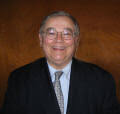
Paul J. Sanchez, CPA, CBA, CFSA, CGMA conducts a small CPA practice in Port Washington, New York. He is also the owner of Professional Service Associates (PSA), a consulting and professional training and development business servicing corporate clients (auditors, controllers, etc.), CPA firms, professional associations and others. He was an assistant professor at Long Island University - C.W. Post Campus as well as an adjunct lecturer at City University of New York. Prior to starting PSA, he was the Vice President-Professional Development for the Audit Division of a regional bank and Director of Professional Practices and Vice President of a money-center bank, where he directed the professional practice development and training for internal auditors. He also was on the technical staff of the Auditing Standards and Examinations Divisions of the AICPA. He practiced public accounting in the New York office of Deloitte where he also was a firm recruiter and in-house professional development instructor. He was an owner and auditing and accounting seminar leader for the Person/Wolinsky CPA Review Courses, a company that prepared candidates to pass the Uniform CPA Examination. He is a frequent lecturer and seminar leader for accounting, auditing, banking, risk assessment and other professional presentations. He is the author of the textbook, “Accounting Basics for Community Financial Institutions” (Financial Managers Society, 2nd edition, Chicago, 2009) and the “Ideas an Analysis Letter: The Sanchez Take” (see www.sanchez-psa.com). As a contributing author, his chapter on ‘An Auditor’s Approach to Risk-Based Auditing: What to Audit and When,’ is included in the textbook, “Effective Auditing for Corporates: Key Developments in Practice and Procedures,” (Bloomsbury Information, Ltd, London, 2012).
Upcoming Webinars

By William Mack Copeland
Date: Nov. 6, 2026
By Carolyn Troiano
Date: Nov. 6, 2026

By Edwin Waldbusser
Date: Nov. 9, 2026

By Dev Strischek
Date: Nov. 9, 2026

By Cathy Horwitz
Date: Nov. 10, 2026
By Paul Pelletier
Date: Nov. 10, 2026

By Lesley Crook
Date: Nov. 13, 2026
By Dr. Susan Strauss
Date: Nov. 16, 2026


By Allen Evitts
Date: Nov. 17, 2026

By Dr. Bill Trombetta
Date: Nov. 17, 2026

By David Nettleton
Date: Nov. 17, 2026
By Bruce Lee
Date: Nov. 17, 2026



By Dr. Susan Strauss
Date: Nov. 18, 2026

By Mike Thomas
Date: Nov. 18, 2026
By Donna K Olheiser
Date: Nov. 19, 2026
By Charles H. Paul
Date: Nov. 19, 2026
By Diane L. Dee
Date: Nov. 19, 2026
By Abdelrahman Abdou
Date: Nov. 19, 2026
By Richard E Cascarino
Date: Nov. 20, 2026
By Edwin Waldbusser
Date: Nov. 23, 2026
By Meredith Crabtree
Date: Nov. 24, 2026
By Pete Tosh
Recorded Session
By Bruce Lee
Recorded Session

By Don Phin
Recorded Session


By Dr. Susan Strauss
Recorded Session


By Margie Faulk
Recorded Session

By Carolyn Troiano
Recorded Session
By Kelly Thomas
Recorded Session
By Rachelle D Souza
Recorded Session
By Marcia Zidle
Recorded Session
By Beverly Beuermann-King
Recorded Session
By Margie Faulk
DOL Reverses Course on Independent Contractor Rule for 2026! How Will Employers Adapt to the Change?
Recorded Session
By Mike Thomas
Recorded Session
By Marcia Zidle
Recorded Session

By Ritu Arora
Recorded Session
By Diane L. Dee
Recorded Session
By Dr. Susan Strauss
Recorded Session
By Diane L. Dee
Recorded Session
By Beverly Beuermann-King
Recorded Session
By Charles H. Paul
Recorded Session
By Marcia Zidle
Recorded Session

By Audrey Halpern
Recorded Session