

Construction Lending And Real Credit Administration: Evaluating, Underwriting, And Monitoring Construction Loans
Duration: 60 Minutes
Construction lending carries more risk than most commercial lending. Repayment depends on the project being finished and producing cash flow from a sale, lease or permanent take-out loan, and during construction the collateral is work in progress while guarantors may lack the outside net worth or income to repay.
This construction lending and credit administration webinar explains how to reduce that risk and extend construction loans safely and profitably. You'll see how to evaluate the developer's ability to repay, underwrite the project so the bank is repaid in full and on time, and monitor the credit exposure and construction activity.
Topics include construction lending policy, sources and uses, hard and soft cost review, LTV, LTC, DCR, interest reserves, bonding and the role of real estate construction administration (RECAD). The course level is basic.
- Explain why construction lending is riskier than other commercial lending
- Evaluate a developer's and contractor's ability to complete and repay a project
- Underwrite a construction loan using sources and uses, cost reviews, appraisal review, LTV, LTC and DCR
- Structure loans with minimum equity, interest reserves and bonding
- Describe the role of RECAD in inspections, disbursements, retention and liens
- Manage change orders, construction problems and problem construction loans
1. Evaluating the developer's ability to repay
- Developer's background and expertise
- Contractor's background and expertise
- Developer's legal structure
- Owner's minimum equity
- Repayment from project cash flow, collateral and guarantees
2. Underwriting and structuring the construction loan
- Construction lending policy: defining a construction loan and the information and documents needed
- Sources and uses, hard and soft cost review and appraisal review
- LTV, LTC and DCR
- Interest reserves
- Bonding
3. Monitoring credit exposure and construction activity
- The role and activities of real estate construction administration (RECAD)
- Inspections and disbursements
- Reallocations and change orders
- Retention, liens, punch lists and charge-backs
- Causes of and cures for construction problems
- Problem asset management of construction loans
Construction loans fail when the developer, the structure or the monitoring is weak. This session gives lenders a clear framework for assessing borrowers, structuring loans and managing problems before they become losses.
It suits commercial real estate lenders and underwriters, real estate credit administration staff, credit policy, credit and risk managers, credit approval officers, chief credit officers, senior lenders, bank directors, CEOs, presidents and board chairs.
- Commercial Real Estate (CRE) lenders, underwriters
- Real estate credit administration team members
- Credit policy managers
- Credit managers
- Credit Risk Managers
- Credit approval officers
- Risk Managers
- Enterprise Risk Managers
- Chief Credit Officers
- Senior Lenders
- Senior Lending Officer
- Bank Director
- Chief Executive Officer
- Bank President
- Board Chairman
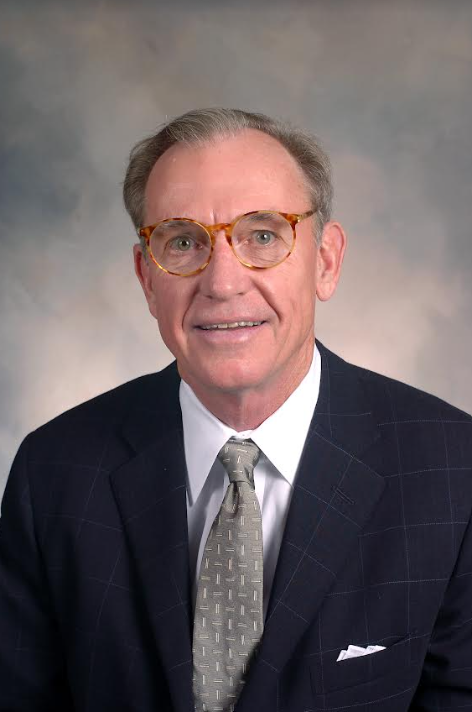
A frequent speaker, instructor, advisor and writer on credit risk and commercial banking topics and issues, Martin J. "Dev" Strischek principal of Devon Risk Advisory Group based near Atlanta, Georgia. Dev advises, trains, and develops for financial organizations risk management solutions and recommendations on a range of issues and topics, e.g., credit risk management, credit culture, credit policy, credit and lending training, etc. Dev is also a member of the Financial Accounting Standards Board’s (FASB’s) Private Company Council (PCC). PCC’s purpose is to evaluate and recommend to FASB revisions to current and proposed generally accepted accounting principles (GAAP) that are more appropriate for privately held firms. He also serves as the PCC’s representative to FASB’s Credit Losses Transition Resource Group supporting the new current expected credit loss (CECL) standard to be implemented in fiscal year 2019 for public companies and 2020 for private firms.
The former SVP and senior credit policy officer at SunTrust Bank, Atlanta, he was responsible for developing, implementing, and administering credit policies for SunTrust’s wholesale lines of business--commercial, commercial real estate, corporate investment banking, capital markets, business banking and private wealth management. He also spent three years as managing director and credit approver in SunTrust’s Florida commercial lending and corporate investment banking areas, respectively. Prior to SunTrust, he was chief credit officer for Barnett Bank’s Palm Beach market. Besides stints at other banks in Florida, Kansas City, and Ohio, his experiences outside of banking include CFO of a Honolulu construction company, combat engineer officer in the U.S. Army, and college economics instructor.
A graduate of Ohio State University and the ABA Stonier Graduate School of Banking, Dev earned his M.B.A. from the University of Hawaii. Mr. Strischek serves as an instructor in several banking schools, including the Stonier Graduate School of Banking, and the Southwest Graduate School of Banking. His school, conference, and workshop audiences have included participants drawn from the ABA, RMA, OCC, Federal Reserve, FDIC, FFIEC, SBA, the Institute of Management Accountants (IMA) and the AICPA.
Mr. Strischek has written some 200 articles on credit risk management, financial analysis and related subjects, and he is the author of Analyzing Construction Contractors and instructor of a contractor analysis workshop. A past national chair of RMA and former RMA Florida Chapter president, Dev has consulted on credit risk issues with banks in Morocco, Egypt, and Angola through the US State Department’s Financial Service Volunteer Corps (FSVC).
Upcoming Webinars

By William Mack Copeland
Date: Nov. 6, 2026

By Carolyn Troiano
Date: Nov. 6, 2026

By Edwin Waldbusser
Date: Nov. 9, 2026


By Dev Strischek
Date: Nov. 9, 2026


By Cathy Horwitz
Date: Nov. 10, 2026

By Paul Pelletier
Date: Nov. 10, 2026



By Lesley Crook
Date: Nov. 13, 2026


By Dr. Susan Strauss
Date: Nov. 16, 2026



By Allen Evitts
Date: Nov. 17, 2026

By Dr. Bill Trombetta
Date: Nov. 17, 2026

By David Nettleton
Date: Nov. 17, 2026

By Bruce Lee
Date: Nov. 17, 2026




By Dr. Susan Strauss
Date: Nov. 18, 2026

By Mike Thomas
Date: Nov. 18, 2026

By Donna K Olheiser
Date: Nov. 19, 2026

By Charles H. Paul
Date: Nov. 19, 2026

By Diane L. Dee
Date: Nov. 19, 2026

By Abdelrahman Abdou
Date: Nov. 19, 2026


By Richard E Cascarino
Date: Nov. 20, 2026
By Edwin Waldbusser
Date: Nov. 23, 2026

By Meredith Crabtree
Date: Nov. 24, 2026

By Pete Tosh
Recorded Session
By Bruce Lee
Recorded Session

By Don Phin
Recorded Session



By Dr. Susan Strauss
Recorded Session


By Margie Faulk
Recorded Session


By Carolyn Troiano
Recorded Session


By Kelly Thomas
Recorded Session

By Rachelle D Souza
Recorded Session

By Marcia Zidle
Recorded Session

By Beverly Beuermann-King
Recorded Session
By Margie Faulk
DOL Reverses Course on Independent Contractor Rule for 2026! How Will Employers Adapt to the Change?
Recorded Session
By Mike Thomas
Recorded Session
By Marcia Zidle
Recorded Session


By Ritu Arora
Recorded Session
By Diane L. Dee
Recorded Session
By Dr. Susan Strauss
Recorded Session
By Diane L. Dee
Recorded Session
By Beverly Beuermann-King
Recorded Session
By Charles H. Paul
Recorded Session
By Marcia Zidle
Recorded Session


By Audrey Halpern
Recorded Session